
Realistic goals
Exercise may support joint mobility, intrinsic foot muscle control, balance and walking tolerance. Results depend on deformity, pain and regular practice.
There is no sound basis for promising permanent reversal of a fixed bony deformity through exercise alone.
What a programme may include
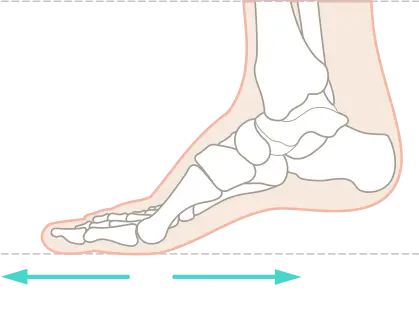
A programme may include pain-free big-toe mobility, short-foot exercises, controlled heel raises and balance work. Sharp pain and swelling are signals to stop.
A physiotherapist can adapt loading to joint mobility, gait and other lower-limb problems.
Part of a wider plan
Exercise may complement suitable footwear, pressure relief and a brace. It does not replace diagnosis.
Increasing pain, numbness, skin colour change or persistent swelling needs professional assessment.
Sources
- Khan et al., 2024 - therapeutic approaches for hallux valgus: systematic review
- Kwan et al., 2021 - systematic review and meta-analysis
- Torkki et al., 2001 - surgery versus orthosis: randomized controlled trial
- Nix et al., 2013 - gait parameters in hallux valgus: systematic review
- Abhishek et al., 2011 - hallux valgus and health-related quality of life