
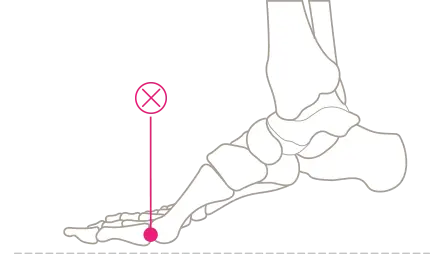
Family predisposition
Family and twin studies suggest that susceptibility can be partly inherited. What is inherited is more likely a collection of structural and functional traits than a ready-made deformity.
Family history does not mean a bunion is inevitable, but it supports earlier attention to symptoms, footwear and foot function.
Foot structure and function
First-ray mobility, metatarsal alignment, flatfoot and loading patterns may matter, but the relationships are complex and no single feature explains every case.
Assessment should consider movement, pain, skin, footwear and gait as well as appearance.
Footwear and age
A narrow toe box and high heels can increase forefoot pressure and aggravate symptoms, but they are not the only cause. Prevalence increases with age.
Practical prevention focuses on reducing pressure and responding early rather than promising certainty.