
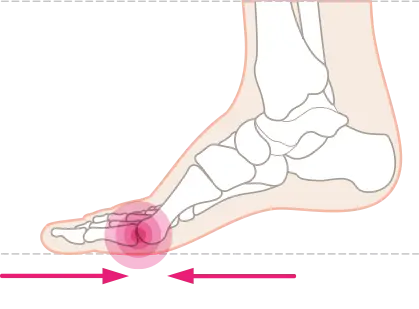
Mechanical irritation
Pain that worsens in tight shoes, after longer walks or late in the day may reflect pressure and irritation. Redness and tenderness over the prominence are common.
Reducing pressure and changing shoes may help temporarily. Recurrent symptoms deserve assessment.
Warning signs
Sudden severe pain, marked heat, rapidly increasing swelling, a wound, discharge or fever require prompt evaluation. Gout, inflammation or infection may be responsible.
Blue skin, loss of sensation and signs of impaired circulation also require urgent advice.
Additional caution
People with diabetes, neuropathy, vascular disease or immune problems should not self-treat wounds or apply strong brace pressure.
A professional can assess the foot, footwear and gait and decide whether imaging is needed.
Sources
- Abhishek et al., 2011 - hallux valgus and health-related quality of life
- Lewis et al., 2022 - hallux valgus and quality of life
- Zirngibl et al., 2017 - hallux valgus: etiology, diagnosis and treatment
- Nix et al., 2010 - prevalence of hallux valgus: systematic review and meta-analysis
- Torkki et al., 2001 - surgery versus orthosis: randomized controlled trial